
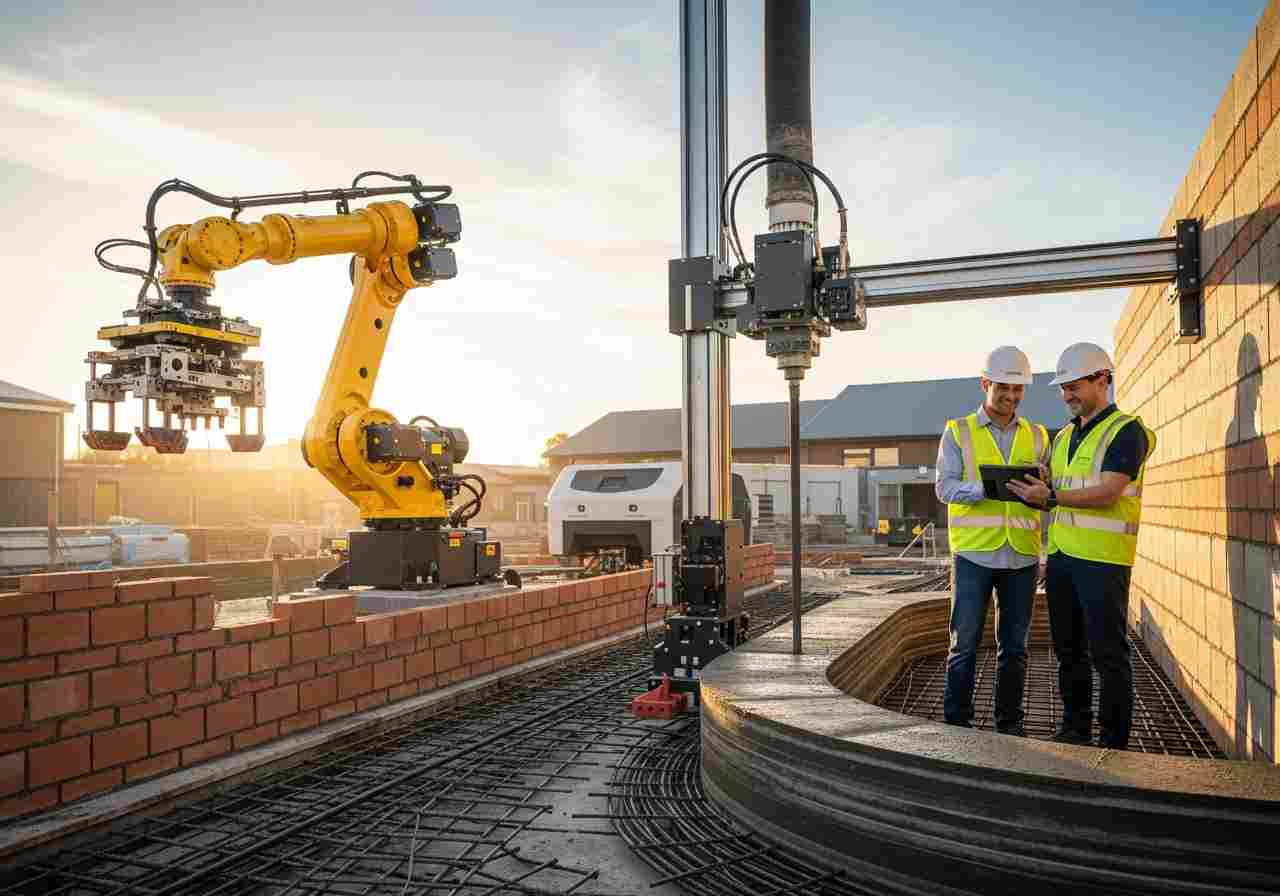
Imagine a construction site. You probably hear the bellowing of the machines and screams of crews. A different scene is to be pictured now. A laser-grade foundation is graded by an independent excavator. One huge 3D printer vibrates, adding concrete walls to it in the absence of form. This is not science fiction. It is the answer of today to a desperate lack of skilled labour. The sector is experiencing the shortage of hundreds of thousands of employees. What then happens when the human beings are not there? The machines are beginning to intrude.
“We’re not automating jobs. Hazards are being automated, says Sarah Hodges, a construction safety tech advisor.
This shift is crucial. It is on correctness and security on par with covering gaps.
Why Robots? It’s Deeper Than You Think
Of course, the problem of the labor crunch is enormous. The U.S. requires an excess of half a million tradespeople at the moment. That is just half the tale though. Consider the work that is most hazardous. Or those that are brutally reiterative. Stone laying in the hot sun. Welding on small smoky areas. This is the area where AI Robotics excels. These technologies replace the dull, dirty and dangerous work. It is a mantra in the automation circles. As a result, human workers will be able to work on complicated jobs. They are made supervisors and trouble-solvers. The replacement is not only valuable. It is in developing a more safe job.
Meet the New Crew: Welders, Printers, Bricklayers
Let’s get specific. Which robots are already at the location?
The Construction Robotics SAM100 is an autonomous bricklayer that is currently in existence. They work alongside masons. A single machine can lay 3000 bricks in a day. A speed changer of a game.
The steel yards are changing into robotic welding cells. Even solar farm grading is automated by Built Robotics. These machines tirelessly work. They do not deviate off digital plans.
Then there’s 3D printing. Printers such as ICON are used by companies. They make complete walls of the home using special concrete. This process reduces wastes hugely. It can also be used in wild and curvilinear designs that have been too expensive to construct.
“Our printer isn’t just a tool. It is a fresh thinking about shelter, says one ICON project head.
A Human Still Runs the Show
This sparks a big fear. Are robots stealing jobs? Let’s reframe that. Frankly speaking, jobs are already going to be vacant. It is the change in skills that is the actual one. A modern mason may turn into a shepherd robot. Their job changes. They program the machine. They do the delicate finish job and elaborate corners. This is not replacement, it is upskilling. This new reality requires new training programs. The AI diagnostics will have to be read by the future foreman, along with the blueprints.
The Stubborn Reality: Why can not a robot tie Rebar?
Here’s the overlooked hurdle. On construction sites, it is anarchy. They are gritty, rough and in a state of flux. A factory floor this is not. The present AI is unable to handle this uncertainty. This has been dubbed the last inch problem. The line of perfect bricks can be laid by machines. But are they able to move in a messy, busy location? Will they be able to deal with an abrupt rain? Not yet. Duties that demand impalement or quick thinking are still human. For now. This is the border of the humanoid robots. But that’s a future chapter.
A Real-life Scenario: Texas Leads by Example
Look at Austin, Texas. There, ICON has constructed a community of 3D-printed houses. The speed of the process is shocking. A small residential wall can be erected in a little as 24 hours of printtime. This is in response to the affordability of housing. It is also a way of testing the technology on a real market. Another example? A robot exoskeleton was utilized by a Japanese company. It enabled the workers to drag heavy beams with ease even at their old age. These aren’t lab demos. They’re active solutions.
The Symphony of the Future Location
The final game is not a single game that is cool. It’s a connected ecosystem. Think of a “digital twin.” First, the location is surveyed by drones on a daily basis. Then AI contrasts the development with the ideal digital model. Lastly, it controls self-driving cars and printers. They adjust in real-time. The entire site is made a responsive organism. The system is manned by human supervisors on a tablet. It is what integrated AI Robotics promises.
The Bottom Line: Either Build or Be Left Behind
This isn’t optional anymore. Our housing and infrastructure objectives are at risk because of the labor crisis. An actual way out is provided through robotics and AI. However, it needs a psychological change in the industry as a whole. Contractors must invest. Codes have to be updated by policymakers. It should be new ways which the population should accept. We are able to make the future using these tools. Or we may wait on our projects in the place where the workers do not come. The blueprint is ready. Now we must have the heart to make use of it.