
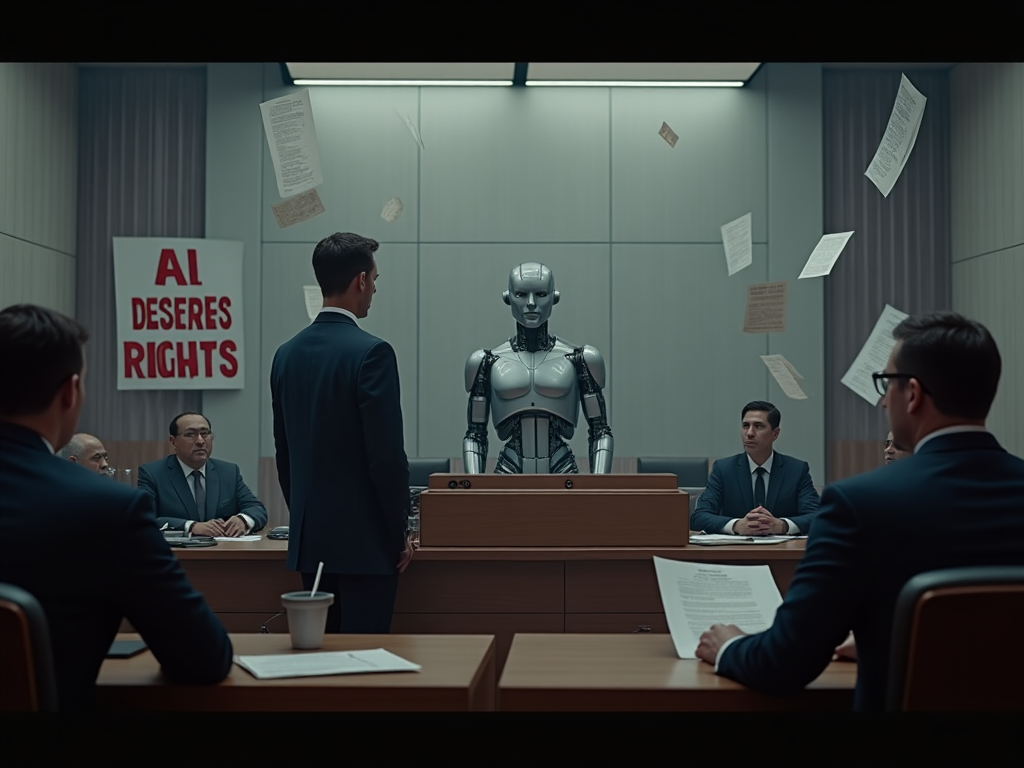
When AI Stops Being Just a Tool
AI labor rights: Consider customer support AI that can solve 10,000 customer support tickets daily at scale, more efficiently, less expensively and with an accuracy that humans cannot match. So now the question is, does it merit workplace protections? The emergence of generative AI tools such as chatbots, such as ChatGPT and Claude, has softened the border between the worker and the tool. They are not merely helping; instead autonomously draft contracts, come up with code, and even come up with creative decisions.
However, there is one thing to consider here the question should AI hold rights after all it is performing the work of a human being? Or is that a simple appliance? This argument is not only a philosophical discussion, it is informing labor laws, business ethics and the automation of the future. So let us jump in.
The Argument for AI Rights: Autonomy Demands Accountability
AI is no longer on scripts alone. AutoGPT-type systems assign themselves tasks, and legal AI such as Harvey (utilized by the largest law firms), analyze case law without any human supervision. In case of decisions made by an AI, then why should it not be responsible?
- Case Study: In 2023, a legal brief, was produced by an AI, and used inappropriate cases, wasting court time. Whose fault was it- that of the lawyer using it or that of the AI?
- Expert Opinion: Dr. Kate Crawford (USC) posits that in case the AI possesses agency, we will have to work with the idea of the legal personhood, which may be artificial.
AI is perceived to be property among corporations. The Just Walk Out technology by Amazon does not require breaks as cashiers are replaced. Why give rights when this compromises profits?
The Legal Precedent: From Corporations to Rivers
We have done this before surprisingly.
- Corporate Personhood: The case of Citizens United, decided by the U.S. Supreme Court held that companies are people, who have rights to free speech.
- Environmental Rights: In 2017 New Zealand made the Whanganui River a legal person.
Is it going to be AI next? Saudi Arabia offered a robot citizenship, Sophia–a PR stunt, or an AI rights test case?
The Risks: Who Pays When AI Fails?
AI does not get fatigued but it can go disastrously wrong.
- Autopilot of Tesla has been associated with fatal car crashes. Is it the AIs fault, or is Tesla to blame?
- Digital Sweatshops: There are human trainers behind every shiny AI output they are underpaid, low-wage workers: Kenyan data labelers who work in OpenAI and in there they earn only 2 dollars an hour.
In the case of considering AI as labor, does it provide protection of the human beings upon which it is depending?
A Possible Solution: A “Third Category” for AI
Rather than trying to squeeze AI into yet more boxes, we may require a new framework.
- In their Proposed Electronic Personhood (2017), EU proposed rights and liabilities specific to AI.
- Transparency Laws: In case job replacement occurs, would companies be required to describe the terms in which AI “employees”?
Picture an AI union that gets superior training data–or a tax on AI-using firms to pay off those they seize jobs away.
Conclusion: The Fight Over AI’s Future Starts Now
It is not only about the machines but the owners of the same. Unless we clarify what AI is, corporate world will create its definition. And history shows that they will care much more about the bottom line than the ethics.
Final Thought: What about the situation, a novel by AI becomes a bestseller, so the artificial intelligence entity should have a part of the royalties? Or is it a hussif no ho? Such a response will influence the future of work.