
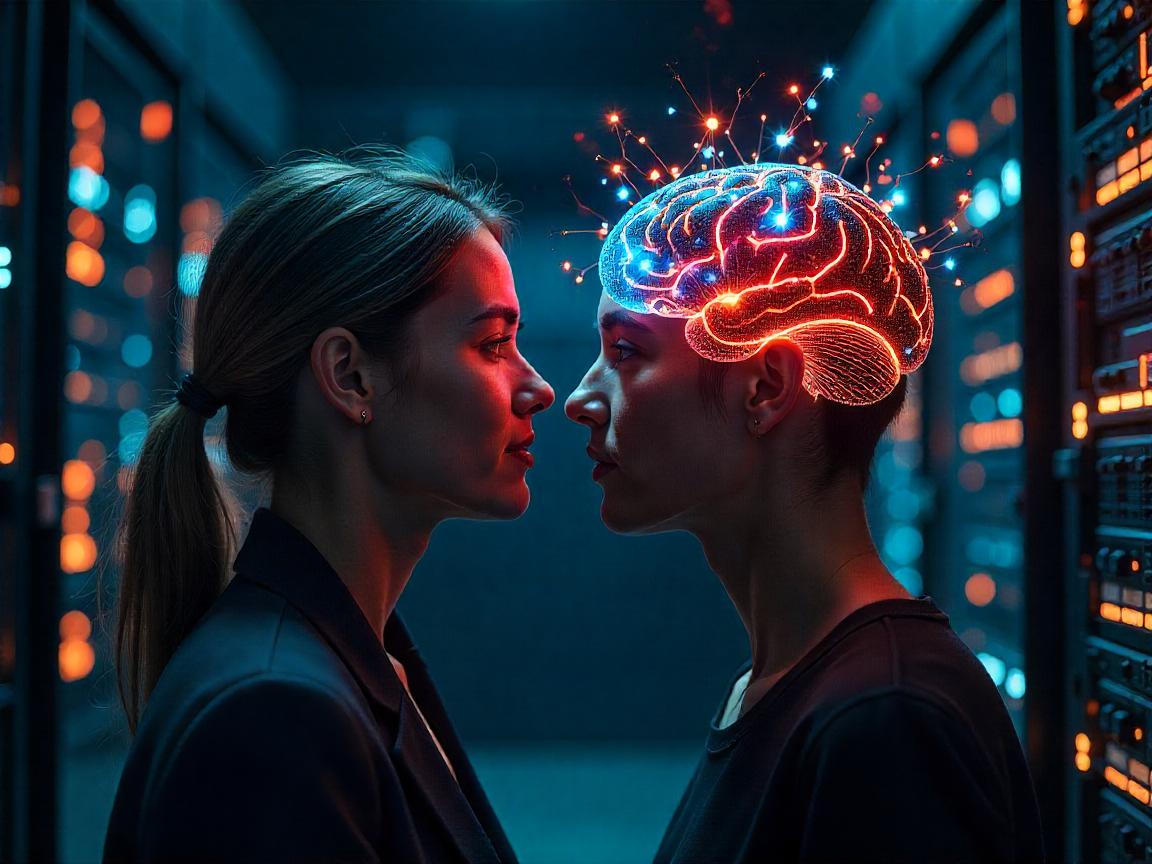
The Memory Gap in the Modern AI: Why “Smart” Isn’t Always Intelligent
It’s strange, isn’t it? We’ve developed AI models that are able to write code, draw legal documents, even create complete scripts for movies – yet most of them cannot remember what you told them 10 minutes ago. That is not just an economical flaw; it is a very significant constraint in the way we build contextual intelligence in machines. When nudging ChatGPT or taking out conversational agent for enterprise support, there is the moment of embarrassment when the AI “forgets” how the flow of the conversation goes? As human beings, memory is very crucial for context, relevance, and meaning. Without that, relations become mechanical, split, superficial.
This is being rectified by the latest architectural inventive features. Not with simple tweaks to the architecture, but radical changes to the building blocks on which memory is based in AI systems. It is not that AI nowadays should “compute” better; it needs to remember better. Think more of it as if you are installing a hippocampus to your AI, rather than an upgrade to your CPU.
The Hardware Shift: Building Memory Into the Core
Let’s be clear: this is not only a matter of software. What it comes down to is a hardware limitation. Non-volatile memory sensing, being an extension of the functionalities of prior memory-sensing chips, chooses to boost the computational resources of the chips instead of separating computation and memory to create bottlenecks as models scale. However, innovators are flipping that model. IBM’s recent launch of their in-memory computing architecture – which replicates the way neurons store and process data in parallel – is a significant switch. According to updates (February 2025) from MIT Technology Review, these analog chips have cut AI model training by as much as 40% in the real-world, in enterprise evaluations.
Similarly exciting is the emergence of such architectures as LongLoRA and Mamba, which are aimed at compressing and highlighting the main elements of memory in long-context models. Mamba, debuted by Stanford in Q1 2025, runs sequences with more than 100K tokens in less than half the compute time of its transformer peers. These are not just benchmarks; these are capabilities that provide a direct payoff of smarter chatbots, legal assistants, and even AI-powered analysts.
Case in Point: Smarter Systems in the Wild
Let’s take a real-world case. A San Diego health tech company called NeuroPulse rolled out a memory-optimized AI assistant to keep track of the patient treatment histories at multiple visits for oncologists. In place of studying static charts every visit, the AI retained a deep memory of the patient’s dialogues, medical results, and even doctor handwritten notes. The result? A 28 percent drop in miscommunication between clinicians and patients in 6 months (source: Digital Health Wire, April 2025).
A change in customer service is also something in which you will find it. OpenAI’s ChatGPT-4 Turbo now has a personal memory feature, remembering the users’ preference, tone, and previous queries. Microsoft’s Copilot recently introduced memory-optimised versions of its Excel and Teams applications, so that productivity tools feel more intelligent collaborators instead of static interfaces. In this case, memory isn’t only about retention but rather continuity of relationship.
Challenges and Warnings: The Price of Persistent Memory
Needless to say, with great memory comes the great responsibility. Misremembering, storing sensitive data, and generating undesirable biases are some of the capabilities of remembering AI. A leak of a 2025 audit from one of the largest AI compliance firms revealed such memory-equipped customer agents at a fintech company had accidentally stored recalled private financial info in nonassociative queries. That’s no anomaly; that is a compliance crisis in the making.
Developers must now implement:
- Real-time memory audits
- Customizable memory retention policies
- Opt-out user commands for privacy
- AI explainability logs that follow decisions about recalling memory
‘It’s not how much you store, it’s the way that you store.’
The Human Parallel: Teaching Machines to Memorise Like Us
The most interesting part is how this evolution reflects in our biology. As humans have short-term memory processing into the hippocampus and subsequent long-term encoding, researchers at the University of Toronto are developing neural nets based on episodic memory. In the words of Dr Simran Joshi at a recent SXSW panel, “AI doesn’t just need data — it needs experiences. It is the idea behind systems that seem less artificial, more conscious.
It’s not just sentimentality. Modern templates that remember emotional tone and history of conversation can create responses that are spookily sophisticated. That’s the new frontier – empathetic AI rather than just efficient one.
Conclusion: Can AI Remember Enables AI to Understand Us Better?
Memory isn’t just another like for like upgrade, it’s the binding substance between artificial and actual intelligence. With a smarter memory comes a deeper interaction, more personalization and – yes – more risk. The interesting part is that we are finally getting out of the cycle of forgetful AI and into a reality where systems can actually grow with us and not just for us.
Therefore, now the question does not stand “Can AI Remember?” It’s “What should it remember?”
And perhaps even more importantly: How are we going to change when it does?